

- JADISS research + marketing layer
- Keywords: JADISS · research · trading journal
- Portal: research #25
As a heatwave is anticipated this summer, we expect a short-term surge in demand for specific consumer goods and services, including cooling products, food and beverages, and electricity. However, the interplay of factors like the heatwave's intensity, duration, and potential inflationary pressures could significantly impact the stock performance of related companies. JADISS emphasizes the importance of a comprehensive scenario analysis to navigate these complexities.
Recent climate change has led to more frequent and intense heatwave and scorching summer phenomena, creating new challenges across various domestic industries. Immediate demand increases are observed in sectors such as cooling appliances, beverages, ice cream, and power supply, fostering expectations for short-term performance improvements in related companies. These seasonally sensitive sectors often attract market attention based on weather forecasts.
Should the heatwave persist, its impact could extend far beyond just increased cooling demand. It could lead to reduced agricultural and livestock production and higher distribution costs, fueling concerns about 'heatflation,' which would increase cost burdens for food-related companies. Furthermore, a surge in electricity consumption could strain power generation and transmission companies and potentially trigger changes in government power supply policies, affecting the energy sector as a whole.
The stock performance of related companies could vary significantly depending on the future duration and intensity of the heatwave. A longer-than-expected heatwave could lead to greater performance improvements for direct beneficiaries like cooling appliance, beverage, and ice cream companies, potentially attracting positive market sentiment. Conversely, if the heatwave ends earlier than anticipated or temperatures return to normal, the short-term demand expectation could quickly dissipate, increasing pressure for stock price adjustments. Additionally, unforeseen cost increases due to production disruptions or logistics issues caused by the heatwave should be closely monitored.
From a supply and demand perspective, individual investors' interest in seasonal themes may rise, while institutional investors are expected to consider long-term climate change trends alongside companies' adaptive capabilities.
Technical indicators can serve as supplementary tools for judgment. For instance, if the RSI enters an overbought zone or the MACD indicator shows a slowdown in the short-term uptrend, caution regarding short-term overheating may be warranted. Conversely, a rebound from a downtrend, supported by the lower Bollinger Band, could signal a potential technical bounce.
Climate-Driven Short-Term Market Shifts
With the increasing frequency of heatwaves and scorching summer conditions due to climate change, immediate demand surges are observed in specific industrial sectors such as cooling appliances, beverages, ice cream, and power supply. These seasonally sensitive sectors often capture market attention based on weather forecasts, leading to expectations of short-term performance improvements for related companies.
Wider Repercussions of Prolonged Heatwaves
Should a heatwave persist, its economic repercussions extend far beyond mere cooling demand. Reduced agricultural and livestock production, coupled with higher distribution costs, could escalate 'heatflation' concerns, increasing cost burdens for food-related businesses. Furthermore, a surge in electricity consumption could strain the entire energy sector and potentially trigger shifts in government power supply policies.
Navigating Market Volatility with Scenario Analysis
The stock performance of companies related to heatwaves can vary significantly based on the duration and intensity of the heatwave. A longer-than-expected heatwave might boost the performance of direct beneficiaries, while an early end could quickly diminish short-term expectations. JADISS advises a comprehensive approach, considering unforeseen cost increases from production disruptions or logistics issues caused by heatwaves, to effectively respond to market changes.
Evidence (JADISS synthesis)
- Increasing frequency and intensity of heatwaves due to climate change
- Increased demand for cooling appliances, beverages, and ice cream during heatwaves
- Impact of heatwaves on agricultural product prices and electricity supply
Hold view
Maintain a watchful stance if the Korea Meteorological Administration forecasts the heatwave to persist for at least two more weeks, and if projections for concrete performance improvements from increased sales by related companies remain consistent.
Trim / exit view
Consider reducing exposure if the heatwave advisory is lifted, signs of an early end to the scorching summer emerge, or if analyses suggest that cost increases due to the heatwave will offset the benefits of increased sales.
Related names · tech snapshot
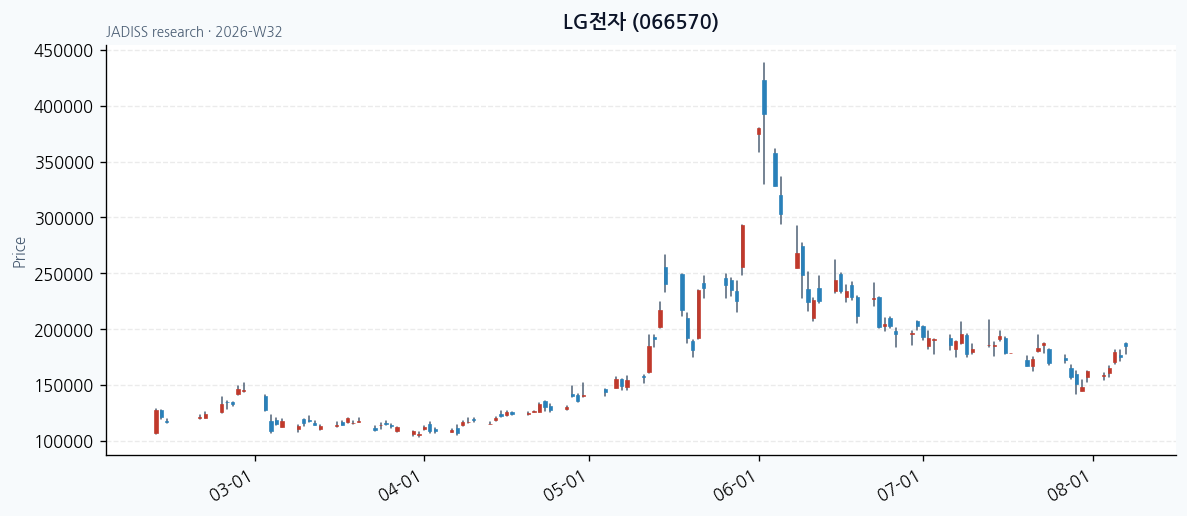
Related: LG전자, 광무, 닷밀, 동양 (chart focus: LG전자)
Close 185,000 · RSI 57.53 · 5D +14.13% · 20D +1.43%
Next step
JADISS channels
Journal
· Home
· Lab
· Blog
· Telegram
Looking to make informed decisions in a volatile market? Explore JADISS's weekly market outlook research and trading journals to understand market trends and develop your own investment principles. Discover more on the JADISS portal.
JADISS buy/sell signal journal · Disclaimer